Can Wisdom Teeth Cause Neck Pain and Stiffness?
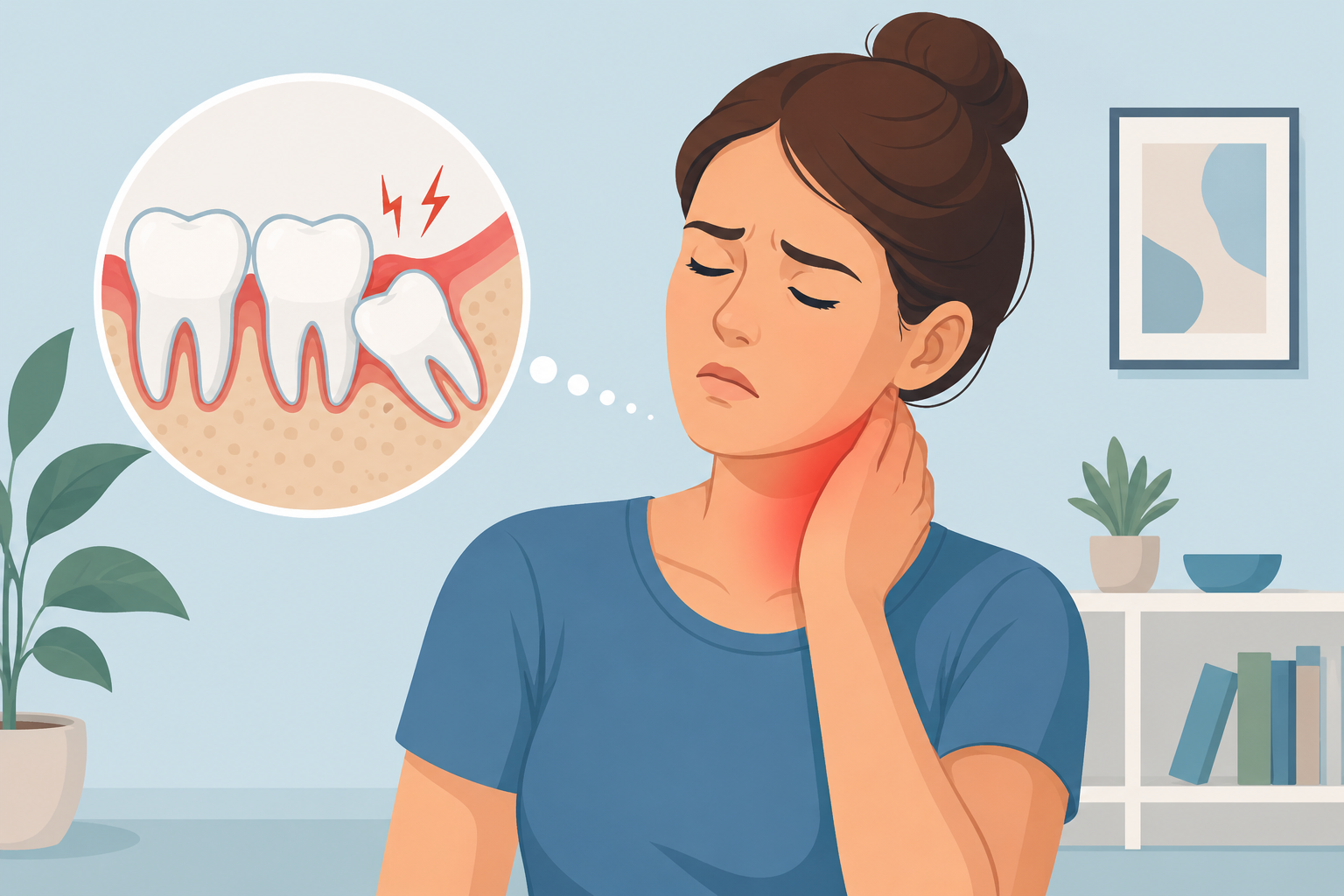
Wisdom teeth are often associated with jaw pain, swollen gums, and headaches, but many people are surprised to learn that these third molars can also contribute to neck pain and stiffness. If you’ve been experiencing discomfort in your neck alongside wisdom tooth symptoms, the two issues may be more connected than you think.
Because wisdom teeth develop in the back of the mouth near the jaw joints, muscles, and nerves that extend into the neck, problems such as impaction, infection, and inflammation can create pain that radiates beyond the mouth.
Understanding this connection can help you determine whether your neck pain is related to your wisdom teeth and when it may be time to seek professional evaluation.
Understanding the Connection Between Wisdom Teeth and Neck Pain
The muscles, joints, and nerves in your face, jaw, and neck work together constantly. When a problem develops in one area, it can affect surrounding structures.
Wisdom teeth often emerge during the late teens or early twenties. In many cases, there isn’t enough room in the mouth for these teeth to erupt properly. As a result, they may become impacted, partially erupted, or infected.
When this happens, inflammation can spread to nearby tissues, causing discomfort that extends into the jaw, ears, face, and neck.
Shared Nerve Pathways
One reason wisdom tooth pain can travel to the neck is because several nerves in the face and jaw share pathways with muscles and tissues in the neck region.
When these nerves become irritated due to pressure, infection, or inflammation around an impacted wisdom tooth, the brain may interpret the pain as coming from multiple areas.
This is known as referred pain.
Jaw Muscle Compensation
When wisdom teeth cause discomfort, many people unconsciously alter the way they chew, speak, or hold their jaw.
Over time, this compensation can strain facial and neck muscles, resulting in soreness, stiffness, and limited range of motion.
Signs Your Neck Pain May Be Related to Wisdom Teeth
Not all neck pain is caused by dental issues. However, certain symptoms may indicate that wisdom teeth are contributing to the problem.
Jaw Pain Alongside Neck Discomfort
If your neck pain appears at the same time as jaw soreness or swelling near the back of the mouth, wisdom teeth may be involved.
The pain may worsen when chewing, yawning, or opening your mouth wide.
Swollen Gums Around Wisdom Teeth
Inflamed gums surrounding partially erupted wisdom teeth can indicate infection or irritation.
This inflammation may extend into nearby tissues, causing tenderness that radiates toward the neck.
Headaches and Facial Pressure
Many patients who experience wisdom tooth complications report headaches, facial pain, and neck stiffness simultaneously.
The interconnected muscles and nerves in these regions often cause symptoms to overlap.
Difficulty Opening the Mouth
A condition known as trismus, or restricted jaw movement, can occur when wisdom teeth become infected or severely impacted.
This limitation often places additional strain on neck muscles, leading to stiffness and discomfort.
How Impacted Wisdom Teeth Can Affect the Neck
Impacted wisdom teeth are among the most common causes of wisdom tooth-related pain.
An impacted tooth is one that cannot fully emerge because it is blocked by bone, gum tissue, or neighboring teeth.
Inflammation and Pressure
As impacted teeth attempt to erupt, they can create pressure against surrounding structures.
This pressure often leads to inflammation that affects nearby muscles and connective tissues.
The resulting discomfort may spread from the jaw into the neck and shoulders.
Increased Muscle Tension
Persistent dental pain often causes people to clench their jaws unconsciously.
This prolonged muscle tension can affect the temporomandibular joint (TMJ) and surrounding neck muscles.
Over time, the muscles become fatigued, sore, and tight.
Changes in Bite Alignment
In some situations, impacted wisdom teeth can alter the way teeth come together when biting.
Even subtle changes in bite alignment may create stress on jaw joints and neck muscles.
Can Wisdom Tooth Infections Cause Neck Pain?
Yes. Infections associated with wisdom teeth can sometimes contribute to neck discomfort.
Partially erupted wisdom teeth create spaces where food particles and bacteria can accumulate, increasing the risk of infection.
Pericoronitis
One of the most common infections involving wisdom teeth is pericoronitis.
This condition occurs when gum tissue surrounding a partially erupted wisdom tooth becomes inflamed and infected.
Symptoms may include:
- Swollen gums
- Jaw pain
- Bad breath
- Difficulty swallowing
- Neck tenderness
- Swollen lymph nodes
If left untreated, the infection can spread to nearby tissues and become more serious.
Swollen Lymph Nodes
The body’s immune response to a dental infection often includes swollen lymph nodes beneath the jaw and in the neck.
These swollen glands can make the neck feel tender and sore.
Other Symptoms That Often Accompany Wisdom Tooth-Related Neck Pain
Neck discomfort rarely occurs by itself when wisdom teeth are the underlying cause.
Additional symptoms may include:
- Ear pain
- Headaches
- Facial swelling
- Jaw stiffness
- Gum tenderness
- Tooth sensitivity
- Difficulty chewing
- Sore throat
- Bad taste in the mouth
The presence of multiple symptoms often provides valuable clues that wisdom teeth may be contributing to the problem.
Temporary Relief for Wisdom Tooth-Related Neck Pain
While professional evaluation is important, several measures may help reduce discomfort temporarily.
Apply Cold Therapy
Cold compresses can help minimize swelling and numb painful tissues.
Many patients find relief by alternating cold therapy with other supportive measures. Understanding the differences between cold and heat therapy can help determine which option is most appropriate during different stages of discomfort.
Eat Anti-Inflammatory Foods
Nutrition can play a role in managing inflammation associated with wisdom tooth irritation.
Incorporating anti-inflammatory recovery foods may help support comfort while awaiting treatment.
Avoid Aggravating Activities
Chewing hard foods, clenching your jaw, and excessive gum chewing can worsen symptoms.
Soft foods and gentle jaw movements may help reduce strain on affected muscles.
Maintain Good Oral Hygiene
Keeping the area clean can help reduce bacterial buildup around partially erupted wisdom teeth.
Gentle brushing and saltwater rinses may provide temporary relief.
When Wisdom Tooth Removal May Be Recommended
Not every wisdom tooth requires extraction. However, oral surgeons often recommend removal when wisdom teeth cause recurring pain, infections, swelling, or damage to nearby teeth.
In some cases, a general dentist may recommend monitoring the situation before proceeding with extraction. Understanding the various reasons extraction gets delayed can provide insight into the decision-making process.
If wisdom teeth are determined to be the source of your symptoms, removing them often resolves the underlying cause and prevents future complications.
Common Questions Patients Ask About Wisdom Teeth
Can Wisdom Teeth Cause Shoulder Pain?
While less common, severe muscle tension originating in the jaw and neck can occasionally extend into the shoulders.
Can Wisdom Teeth Cause Swollen Glands in the Neck?
Yes. Infections and inflammation around wisdom teeth may cause nearby lymph nodes to become enlarged and tender.
Can Neck Pain Continue After Wisdom Tooth Removal?
Temporary soreness is possible during recovery, but pain related to impacted or infected wisdom teeth often improves significantly after treatment.
Can Wisdom Teeth Grow Back After Removal?
Many patients worry about recurring symptoms after extraction. Fortunately, true wisdom teeth do not regenerate. Learning whether removed wisdom teeth return can help clarify common misconceptions.
Is There a Best Time to Remove Wisdom Teeth?
Many patients schedule treatment during periods when recovery is easier to manage. For students and families, understanding the benefits of summer extraction timing can be helpful when planning treatment.
When to See an Oral Surgeon
You should schedule an evaluation if you experience:
- Persistent neck pain with wisdom tooth discomfort
- Swelling around the jaw or gums
- Difficulty opening your mouth
- Recurring infections
- Swollen lymph nodes
- Fever
- Difficulty swallowing
Ongoing headaches or facial pain
Early evaluation can help identify the source of your symptoms before complications develop.
Don’t Ignore Neck Pain That May Be Coming From Your Wisdom Teeth
While neck pain is not always caused by wisdom teeth, impacted teeth, infections, and chronic inflammation can sometimes trigger symptoms that extend beyond the mouth.
Because the jaw, face, and neck share muscles and nerve pathways, discomfort in one area can easily affect another. If you’re experiencing neck pain along with wisdom tooth symptoms, a professional evaluation can help determine whether your wisdom teeth are contributing to the problem.
If you’re dealing with wisdom tooth pain, jaw stiffness, or recurring neck discomfort, consider scheduling a consultation to discuss your treatment options and find lasting relief.
Book a Consultation

How to Choose a Trusted Wisdom Tooth Removal Clinic
April 20, 2026

Swollen Gums Around Wisdom Teeth: Is This Normal or a Problem?
December 15, 2025
When Wisdom Tooth Pain Is an Emergency (and When It Can Wait)
January 1, 2026
Can Wisdom Teeth Grow in Your 30s? Here’s Why
May 14, 2026
Why Regular Dental X-Rays Are Essential for Wisdom Teeth
June 3, 2026